Fine, thin hair and a bob are a natural pairing. Taking the length up to the jaw or collarbone removes the sparse, wispy ends that can drag fine hair down, and the shape you choose then decides whether the hair looks dense, airy, sleek or full of movement. The eleven bobs below run from razor-blunt lines to feathered, layered tips. Each one is a different answer to the same question: how do you make fine strands look their best at this length? Use them as reference points for a conversation with your stylist, since your own density, growth patterns and face shape will shape the final result.
#11 The Razor-Sharp Chin-Length Blunt Bob

This is the purest version of the blunt bob. The ash-blonde hair is one length with no visible layers, parted in the center and smoothed flat so that the bottom edge reads as a single, crisp horizontal line with sharp corners at the jaw. For fine hair, that unbroken line is the whole point: when every strand ends at the same level, the perimeter looks as dense as it can. If you want it, ask for a blunt, one-length cut with no thinning or texturizing at the ends, and be ready for regular trims, because the line loses its edge quickly as it grows. A flat iron or a smoothing blow-dry brings out the shine you see here, and a light-weight gloss or smoothing serum is kinder to fine hair than anything heavy.
#10 The Deep Side-Part Jaw-Length Blunt Bob
A deep side part changes the character of a blunt cut completely. Here the espresso-dark hair sweeps across the forehead in one weighty curtain, and the ends brush the jawline in a clean, glossy edge with no layering. Because dark hair against lighter skin shows every gap, the solid sweep matters: it hides the part line and creates the illusion of a thicker sheet of hair.

If you try this, ask your stylist to place the part where your hair naturally wants to fall, so it lies flat without needing to be forced. Part it a little deeper or shallower to change how much hair covers the forehead. A smoothing blow-dry with a round brush at the ends and a small amount of shine serum will keep the surface looking polished.
#9 The Soft Layered A-Line Bob with Feathered Ends
Turn to the side and this cut's real shape shows. The hair is longer at the front, reaching down toward the collarbone, and shorter toward the back, so the line angles downward from nape to face. The ends are wispy and feathered, and a few light-brown strands with caramel warmth catch the window light as they curve gently inward.

The feathering gives fine hair movement that a strictly blunt end can't, while the front length keeps the cut from feeling skimpy. Ask for soft, long face-framing layers and a gradual angle rather than a dramatic slope. Style the ends with a small round brush or a loose flat-iron bend, and use a light texture spray at the mid-lengths so the layers separate without going limp.
#8 The French Bob with Wispy Bangs
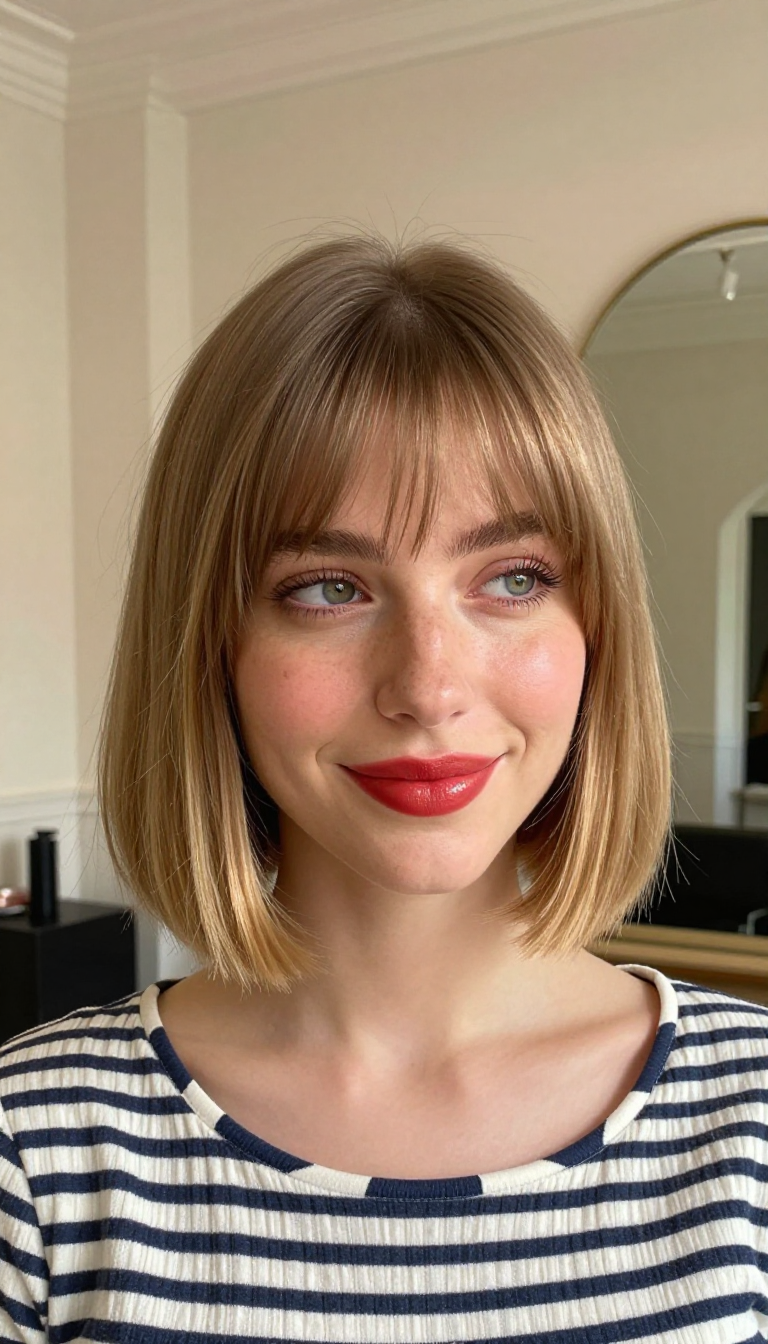
Short, airy bangs grazing the brows are what make this bob unmistakably French. The dark-blonde hair sits between cheekbone and chin, with a rounded outline and ends that look lightly textured and a little undone rather than razor-cut. The fringe is deliberately sheer, so the forehead shows through it, which suits fine hair far better than a heavy, solid fringe would.
When you talk to your stylist, say you want a see-through fringe rather than a full one, and ask them to blend it softly into the sides. Fine bangs get greasy fast, so a quick blast with a dry shampoo at the roots, or washing the fringe alone, keeps them light between full washes.
#7 The Graduated Stacked Bob from Behind
Seen from the back, this chestnut-brown bob is all about structure. The nape is cut short and tidy, and the hair above it rises in angled, stacked layers that build a rounded fullness around the crown. The sides slope forward toward the chin.

For fine hair, the stacking is what supplies body: the shorter hair underneath props up the longer hair on top, so the shape holds itself up without relying on product. Ask for a short, neatly tapered nape and a gentle graduation rather than a steep one. Because the back is short, the nape grows out noticeably after a few weeks, so plan on frequent visits to keep the outline sharp.
#6 The Collarbone-Grazing Blunt Lob with a Slight Swing

This is a bob for people who want length without the weight. The honey-blonde hair falls past the jaw to the collarbone, with a center part, straight ends and a faint outward swing where it meets the shoulders. Lighter pieces around the face brighten the front and add dimension, which also helps fine hair look less flat against the skin.
Blunt ends keep the perimeter looking solid even at this longer length. Ask for a clean edge with only subtle, hidden layering if you want a little extra movement, and finish with a quick blow-dry that curves the ends slightly outward. The extra length also gives you the option of tucking one side behind the ear.
#5 The Choppy Shaggy Bob with Curtain Fringe
Texture is the focus here. The dark brown hair with auburn warmth is cut into piecey, choppy layers that finish around the jaw with a slight flip at the ends, while a curtain fringe parts in the middle and sweeps to each side into the face-framing layers.

Because the layers are uneven and airy, fine hair appears fuller and less like a single flat panel. Describe it to your stylist as a shaggy bob with a curtain fringe and choppy ends, and bring the photo along. A texturizing spray worked through with your fingers and a bit of rough-dry movement creates this lived-in look, and it's forgiving between trims since it's meant to look relaxed.
#4 The Copper Inverted Bob with Rounded Ends

An inverted bob is cropped short at the back and lengthens toward the front, and here the copper-auburn hair curves under in a smooth, rounded finish. The shine running along the curve is what you notice first, and it's a good example of how a vivid, even shade can make fine hair look rich and substantial.
The shorter back keeps the weight forward, so the line draws the eye to the face. If you're considering it, ask how short the back should be to suit your nape and growth pattern, since the stacked back needs to sit neatly. Bold copper tones tend to fade, so ask your colorist about maintenance, such as color-safe shampoo and gloss touch-ups.
#3 The Asymmetrical Platinum Bob
Contrast is the signature of this cut. One side sits just below the jawline while the other is cropped a few inches shorter, up near the cheekbone, and both keep a crisp blunt edge. A diagonal sweep of side-parted fringe ties the two lengths together.

The blunt edges keep pale, fine hair looking dense, and the uneven lengths add interest that a one-length bob doesn't have. It's a bold choice, so talk through how much difference in length you want before the scissors come out. Very light blonde also needs gentle care, so ask about purple shampoo and bond-support treatments to keep it smooth and shiny.
#2 The Wavy Beachy Bob with Feathery Layers

Loose S-waves do a lot of work for thin hair. This strawberry-blonde bob rests at the chin with soft, feathery tips that overlap and bounce, and the waves add body and visible volume that straight fine hair often lacks. Tucking one side behind the ear shows off the layers and keeps the shape from looking heavy.
To get the look, ask for soft layered ends that will wave easily rather than sharp, blunt ones. A bit of mousse or sea-salt spray on damp hair, then a diffused dry or a loose curling-iron wave on dry hair, builds the texture. Avoid brushing the waves out completely, since that flattens the volume you're trying to create.
#1 The Rounded Silver Bob with Feathered Ends
Silver-gray hair suits a soft, rounded shape. This chin-length bob has a subtle side part for lift at the roots, light face-framing layers, and ends that taper gently toward the jaw with a smooth, glossy finish. The mix of silver tones adds natural dimension, which keeps fine hair from looking flat.

Gray hair can feel wiry or dry, so shine matters as much as shape. Ask your stylist to keep the layers light and the ends soft rather than choppy, and use a purple or blue-toned shampoo sparingly if you want to keep the silver cool. A root-lifting spray and a quick round-brush blow-dry at the crown keep the top from falling flat.
Whichever of these shapes you lean toward, bring a reference photo and describe your hair's real behavior, including how fine it is, where it parts and how quickly it goes flat. That is the information that lets a stylist adapt any of these bobs to you.
