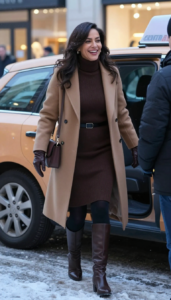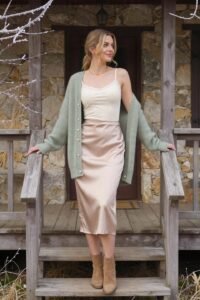
There is a particular winter moment every woman knows: you pull on a thick knit, zip yourself into a generous coat, glance in the mirror, and see a rectangle staring back. Warmth has won, and proportion has lost. The good news is that bulk is not the problem. Unmanaged bulk is. With a few deliberate decisions about shape, length, and negative space, a bulky coat over a chunky sweater can look sculptural, cozy, and entirely intentional.
Start With the Logic of Volume
Boxiness happens when volume stacks evenly from shoulder to hem, leaving the eye nowhere to rest. The fix is contrast. If the top half is big, the bottom half should be slimmer, longer, or visibly different in texture. Think of your outfit as having one dominant shape and a few quiet supporting ones. A puffer and a cable-knit are both loud, so everything else, from trousers to shoes to bag, needs to be calm and streamlined.
Before you accessorize, check three points: where your shoulders sit, where your waist is implied, and where the coat ends. Those are the places a silhouette is won or lost.
Choose the Right Coat Size, Not Just a Bigger One
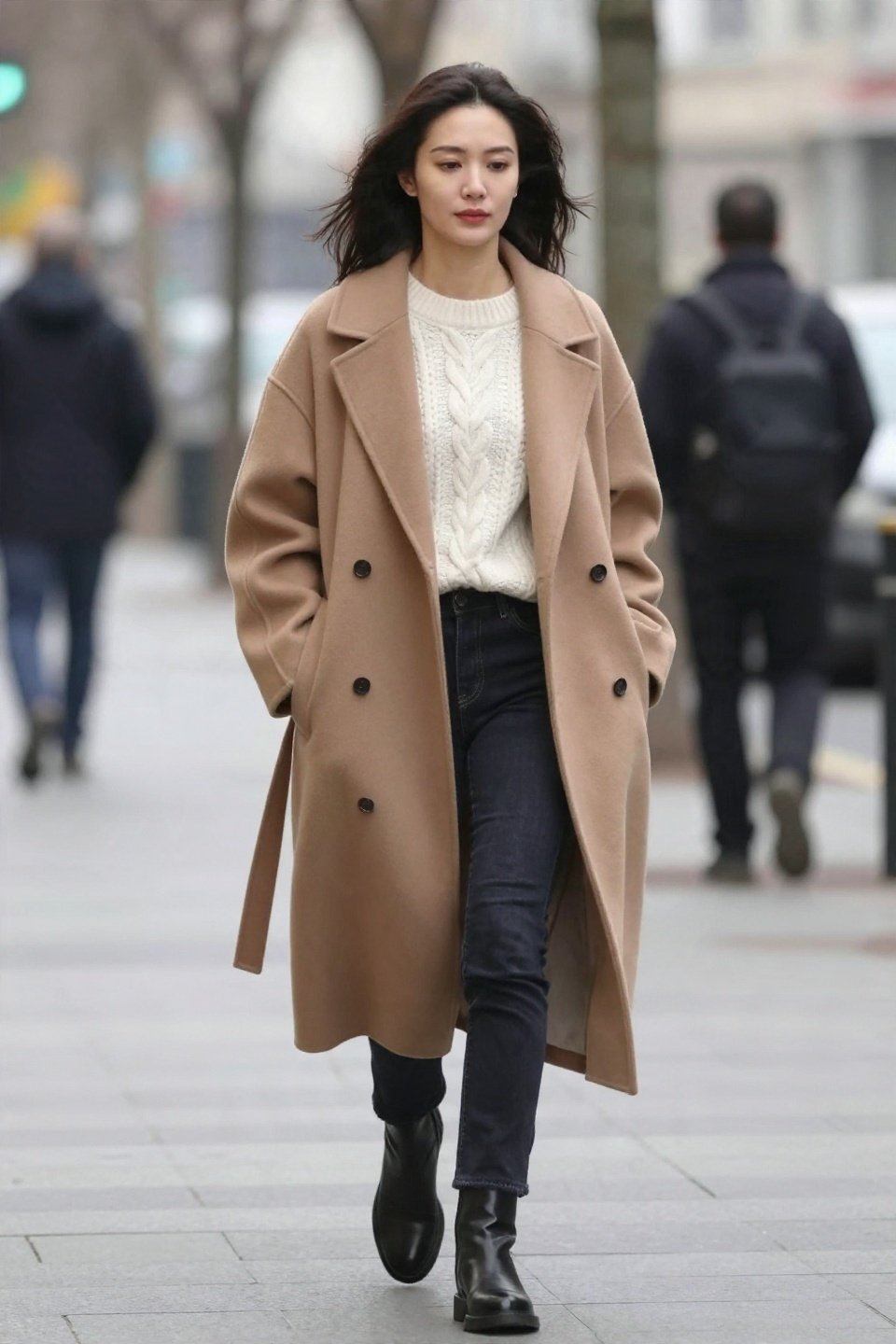
Many women solve the sweater problem by buying a coat two sizes up, which only creates a tent. Instead, try your coat on with the thickest knit you own. The shoulder seam should land at or just beyond your natural shoulder, not halfway down the arm. The sleeves should allow your sweater cuffs to peek out or sit comfortably inside without bunching. If you can cross your arms without feeling trapped, the fit works.
Structure matters as much as size. A wool coat with a defined collar and clean lapels holds its shape over knitwear. A shapeless fleece-like fabric collapses into it. When shopping, look for weight that drapes rather than stands away from the body.
Create a Waist Without Cinching Everything
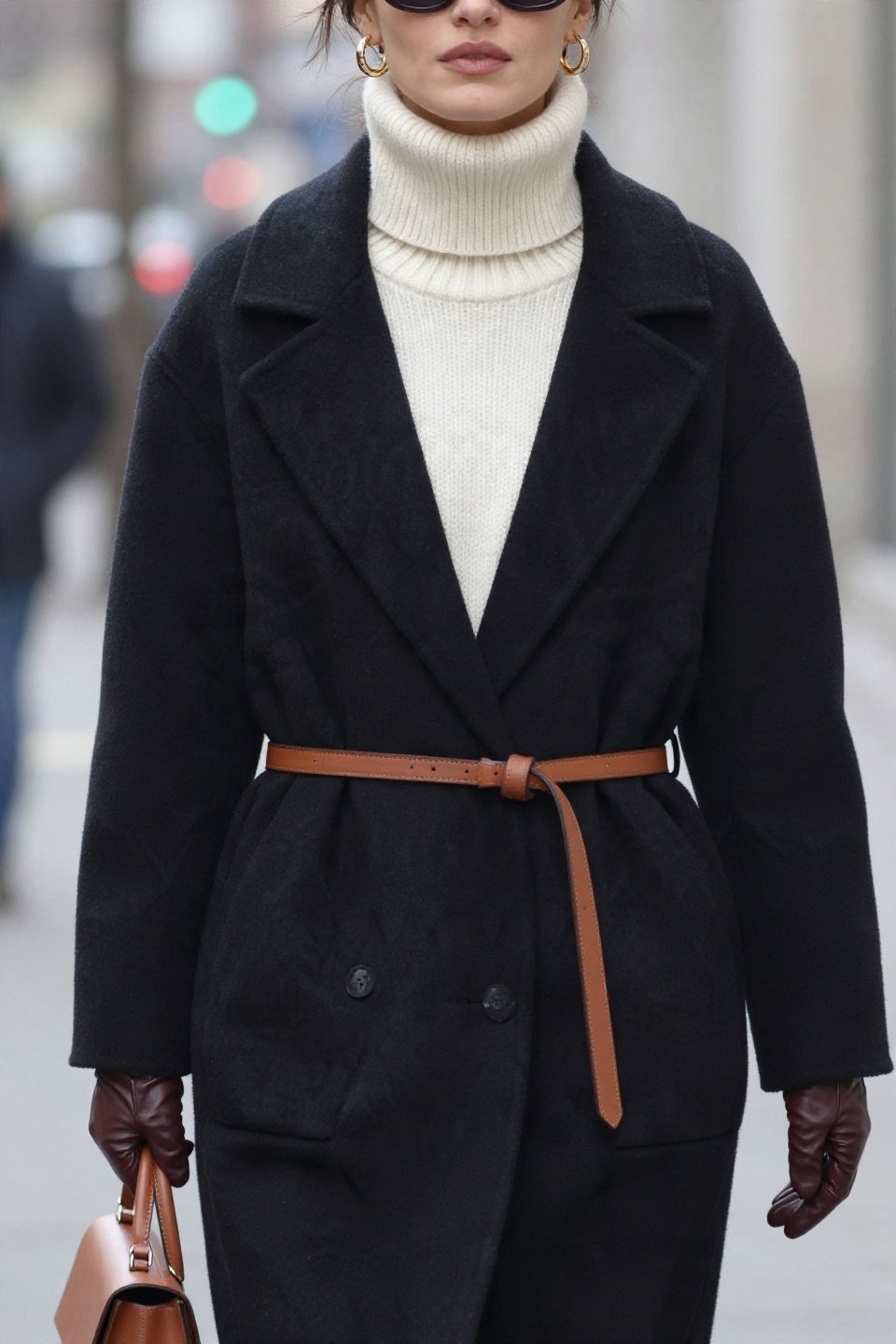
A belt is the quickest way to break up a block. Wear it over the coat, at the narrowest part of your torso, and choose a medium-width leather style so it doesn't add another layer of bulk. If your coat has no belt loops, tie the coat's own sash loosely in a half-knot rather than a tight bow.
Prefer to leave the coat open? Then define the waist underneath. Tuck only the front hem of the sweater into high-waisted trousers, leaving the rest loose. This small half-tuck gives a hint of a waistline that shows through the open coat front, and it keeps the knit from swelling around your hips.
Play With Length and Leg Line
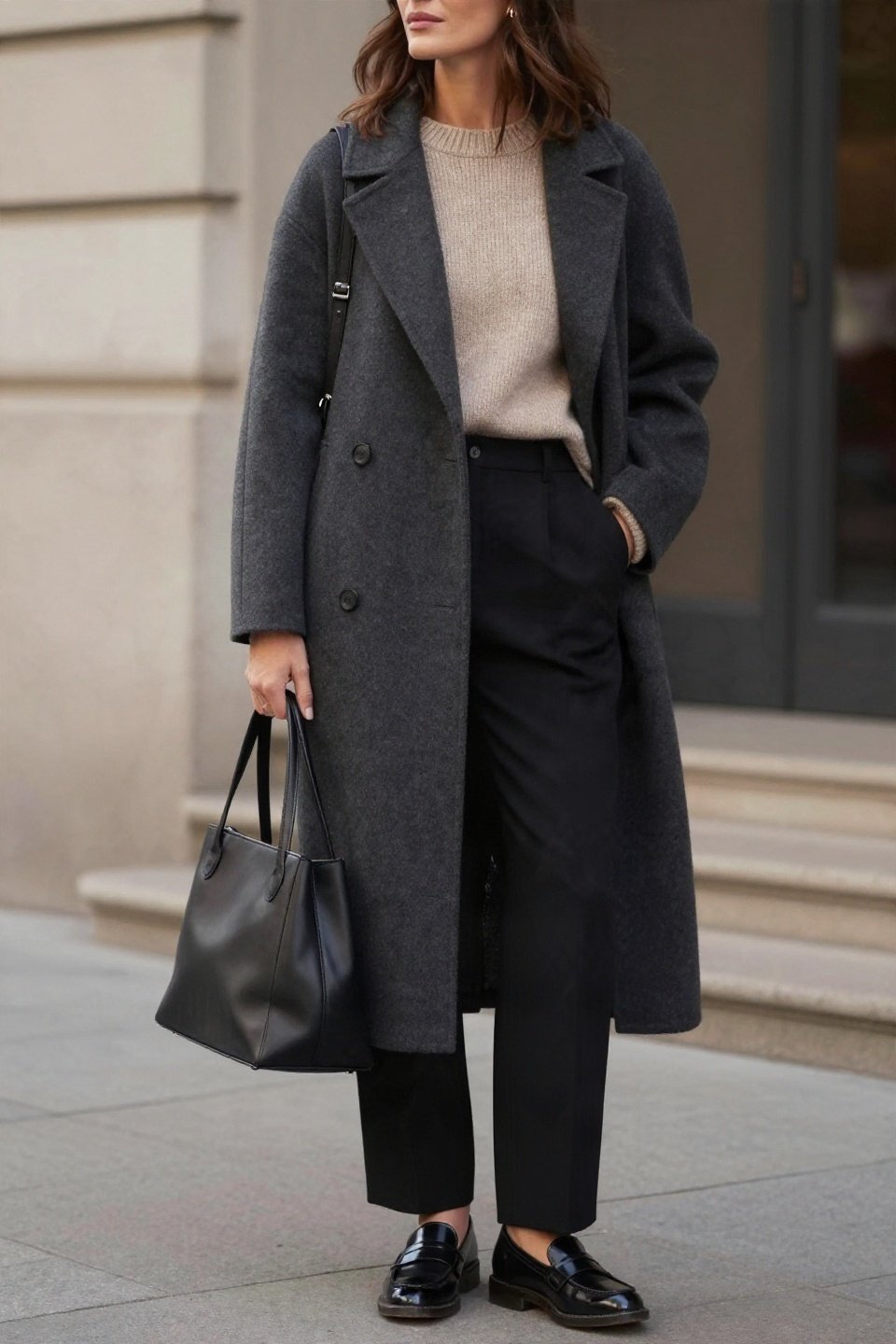
Hem length is your most powerful proportion tool. A coat that falls to mid-calf or ankle elongates the figure and turns bulk into drama, especially when paired with slim bottoms. A cropped puffer works too, but only if it sits at the high hip and meets high-waisted pants or a long skirt, so the volume stays contained above the waist.
The awkward zone is the coat that ends at the widest part of the hip. If you own one, balance it with a longer sweater hem peeking out or with a column of one color from sweater to trousers, which visually narrows the middle.
Let Color and Texture Do Quiet Work
Tonal dressing is a gift to anyone layering heavy pieces. Wear a stone sweater beneath a taupe coat, or chocolate under espresso, and the eye reads one fluid line instead of two competing masses. If you prefer contrast, keep it vertical: a dark coat open over a pale knit creates a slimming central panel.
Texture needs the same restraint. A bouclé coat over an aran knit is a lot of surface. Pair a textured knit with a smooth wool coat, or a fluffy coat with a fine-gauge-looking, tightly spun chunky sweater, so only one piece takes the spotlight.

Manage the Neckline
The collar area is where bulk piles up fastest. A thick turtleneck inside a high coat collar can swallow the face. Try a crew or a folded mock neck, and let the coat collar sit open and flat. If you love a big cowl, skip the scarf entirely and turn the coat collar down. Alternatively, wear a slim scarf tucked inside the coat to keep the neckline clean.
Hair helps, too. Pulling it into a low bun or a sleek ponytail opens the neck and shoulders, preventing a heavy, hooded effect.
Rethink the Bottom Half: Trousers, Jeans and Denim Shapes
With all that volume on top, the lower half does the balancing. The most reliable formula is a leg that is either clearly slim or clearly wide, never a vague in-between. Straight-leg jeans with a clean, slightly cropped hem show off the ankle and keep the coat from looking like it is sitting on a block. Slim, high-rise trousers in a dark wool do the same job with a more polished finish. Wide-leg trousers can work beautifully, but only when the coat stops above the hip or the trousers have enough drape to move independently. A bulky coat over a wide, stiff denim leg creates a tent. A fluid, pleated trouser in crepe or wool flannel keeps the silhouette moving. Tuck the front of the sweater, or just the first inch of it, to mark the waistband and prove that a body exists under all the knitting.

Shoes That Ground the Silhouette
A big coat needs a substantial shoe, but substantial does not mean clunky. Think sleek ankle boots with a defined heel, polished loafers with a slight lug sole, or knee-high boots that extend the leg line beneath a hip-length coat. Delicate ballet flats or thin-soled sneakers can make the top half look overwhelming, as if the outfit has lost its anchor. Color continuity helps. Matching your boots to your trousers, or your tights to your boots, draws one unbroken vertical line from hem to floor. This is the quiet trick behind many effortlessly long-looking winter outfits: the eye travels downward without interruption, and the coat reads as one layer in a deliberate composition rather than the whole story.
Skirts and Dresses Under Heavy Layers
Skirts are one of the best antidotes to boxiness, because they introduce movement and leg at the same time. A slip skirt or bias-cut midi in satin, with a chunky sweater and a roomy coat over it, creates the kind of contrast that looks styled rather than bundled. The shine of the skirt lightens the heavy knit, and the fluid hem swings out beneath the coat. Mind the proportions. If the coat falls to mid-thigh, a midi skirt should peek out by at least a few inches; if the skirt hem and coat hem sit within an inch of each other, they compete. A mini skirt with opaque tights and knee-high boots under a cropped, bulky coat is a cleaner, more youthful alternative, and it keeps the leg long. Knit dresses deserve a mention here too. A long, ribbed knit dress under a coat can feel like a single column of softness, and a thin belt over the dress, under the open coat, restores the waist.

Accessories That Edit the Outline
Accessories can tighten or loosen the whole look, so choose them as if they were punctuation. A structured bag carried in the hand or on the shoulder adds a hard line that counters the softness of knitwear. Oversized slouchy totes make a bulky outfit even bulkier, so save them for the days when the coat is fitted and the sweater is thin. Belts deserve a place in every winter wardrobe. A leather belt worn over the coat, at the narrowest point, is the fastest route to shape, but use a medium width, not a corset-style cinch, which can bunch the fabric. Gloves in a slim leather give definition to the wrist where the sleeves of knitwear tend to balloon, and a beanie should sit slightly back on the head rather than pulled down low, to keep the face open. Jewelry is easy to overlook under layers, but a pair of strong earrings, such as sculptural gold hoops or pearl drops, draws the eye up to the face and breaks up the mass of fabric below it.
Quick Fixes When It Still Feels Too Big
Even a thoughtful outfit can feel off on the day. Before leaving the house, run through a few fast adjustments. Push the coat sleeves up an inch to reveal the sweater cuff and wrist, which creates a break in the bulk. Fold the sweater hem so it does not extend past the coat. Unbutton the coat and let it hang open to show a vertical line of the sweater beneath. If the coat has a belt, tie it loosely at the back for a softer shape. If the sweater is the problem, swap it for a version with a shorter body or a more fitted sleeve. Dropped shoulders on both coat and sweater double the width at the top, so make sure at least one of them has a more precise shoulder seam.
The Final Check Before You Step Out
Stand in front of a full-length mirror and take a quick inventory. Can you see a point of definition, whether waist, ankle, wrist or neck? Is there a gap of space between the coat hem and the hem of whatever sits below? Does one piece lead while the other supports? If the answer to all three is yes, you are wearing volume deliberately. The goal is never to shrink yourself inside heavy winter clothes. It is to give the bulk a clear structure, a place to breathe, and a visible you in the middle of it. Once you have mastered that balance, the chunkiest sweater and the biggest coat become not a problem to be solved, but the most comfortable, confident outfit of the season.