10 Bob Haircuts for Fine Thin Hair With Bangs, Side Parts, and Subtle Angles
Fine, thin hair and a bob can be a very good match, because the cut does much of the work that volume products only imitate. A crisp perimeter makes the ends look denser, a well-placed part adds lift where it counts, and a subtle angle gives the shape direction without removing weight. Bangs can add softness around the face, but they take a little more planning when strands are delicate. These ten bobs show how length, parting, fringe, and shape can be adjusted for fine hair, with ideas for what to ask your stylist.
The Blunt Chin-Length Bob With a Full Fringe
The edge is what makes this bob work. The ash-blonde hair is cut in a single length at the chin, so the ends form a solid, straight line instead of tapering off. That line reads as thickness, which is useful when each strand is fine. The fringe sits just above the brows and is slightly soft rather than heavy, so it frames the eyes without looking like a block of hair. The glossy, smooth finish also helps, since light reflecting off flat hair gives a fuller look.
When you book, ask for a blunt perimeter and a fringe that is sized to your density. With fine hair, a very wide, thick fringe can pull too much from the sides and leave the bob looking sparse, so ask your stylist to check how much hair they plan to section forward. Expect trims every few weeks to keep the line sharp and the fringe off your lashes. A little lightweight smoothing product is usually enough, because heavy balms can weigh straight hair down.
The Deep Side-Parted Bob With a Sleek Sweep
A deep side part is one of the easiest ways to make a fine bob look larger. Here the part sits off-center, with the longer side tucked behind the ear and the shorter side sweeping across the cheekbone. That asymmetry creates an angled line from the part down to the jaw, and it gives the dark, straight hair a sculpted look. The ends are blunt and finish around the chin, so the lower edge still looks dense.
The root lift along the part is a small detail that matters. Fine hair tends to lie flat against the scalp, so try blow-drying the roots up and away from the part before you smooth the lengths. Part your hair when it is damp so the direction sets as it dries, and a light-hold root spray can keep the lift going. Tell your stylist which side you naturally part on, since forcing a part against your growth pattern can make thin hair separate and show scalp.
The Subtle A-Line Bob, Longer in Front
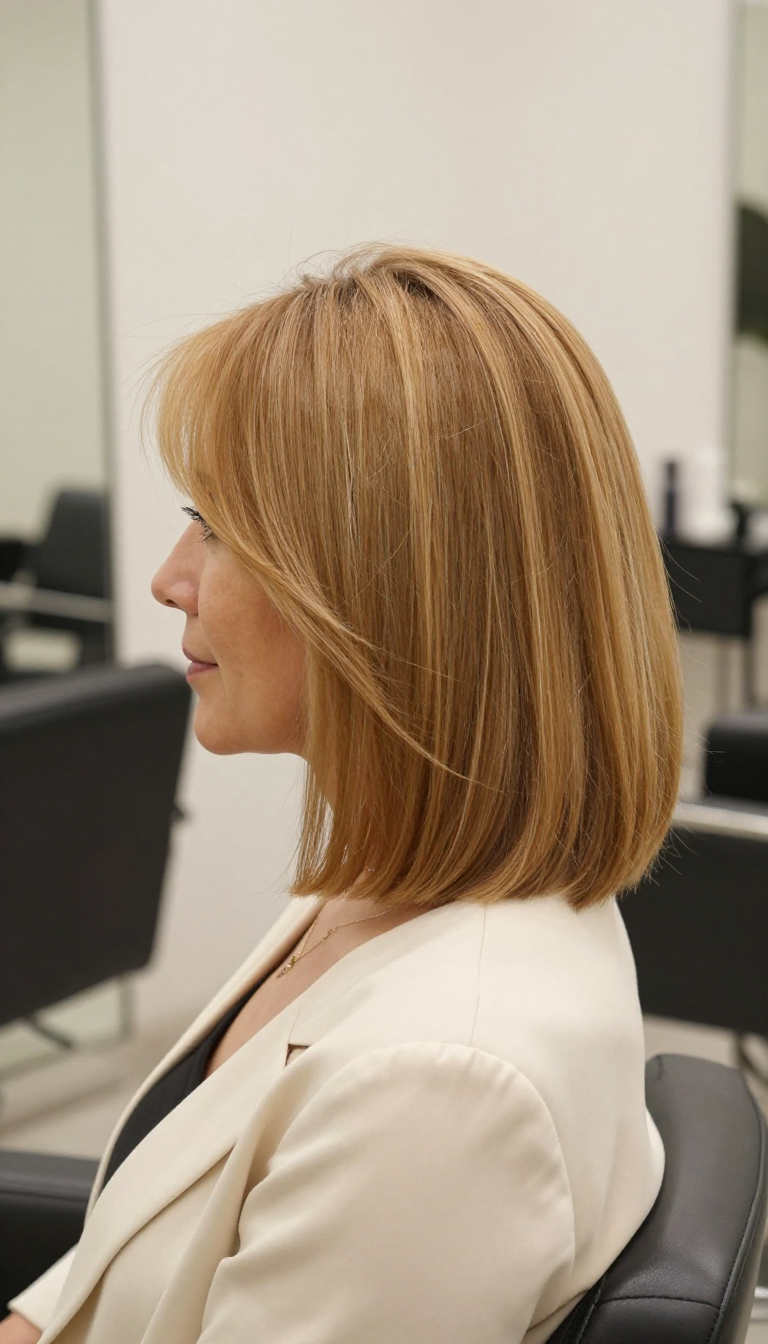
In profile, the shape of this honey-blonde bob becomes clear. The front pieces are slightly longer and skim the jaw, and the back sits a little shorter, producing a gentle slope that points toward the face. It is a quiet angle, not a dramatic one, and that restraint suits fine hair, where a steep slope could leave the back looking thin. A few face-framing pieces fall forward, which softens the transition and keeps the cut from feeling severe.
If you want this version, describe it as a mild A-line with only a small length difference between front and back, and ask to see how much angle your stylist plans before they start. The warm, multi-tonal blonde adds visual depth, so the hair reads as fuller than a single flat shade would. A round brush turned under at the ends and a quick pass of a flat iron will give the soft body you see here. Because the front length falls near the collarbone line, it also works well if you like the option of tucking hair behind your ear.
The Short Stacked Bob With a Rounded Back
Seen from behind, this bob is all about shape. The back is cut shorter and rounds gently over the head, ending right around the nape, while the sides angle a touch longer toward the jaw. That stacked build pushes the hair upward and inward, so the crown looks lifted and the lower edge looks tidy and compact. The light-brown color has subtle caramel tones, which show up in the strands and add dimension to the otherwise smooth surface.
Stacking is a good fit for fine hair that falls flat in the back, but it needs a clean neckline to look polished. Ask your stylist how short they plan to go at the nape and whether they will taper it, and bring a rear-view photo, since most reference pictures show only the front. Because the short back grows out quickly, plan on regular visits to keep the curve. At home, blow-drying the back section upward with a small round brush will help preserve that rounded volume.
The Feathered Silver Bob With Side-Swept Bangs
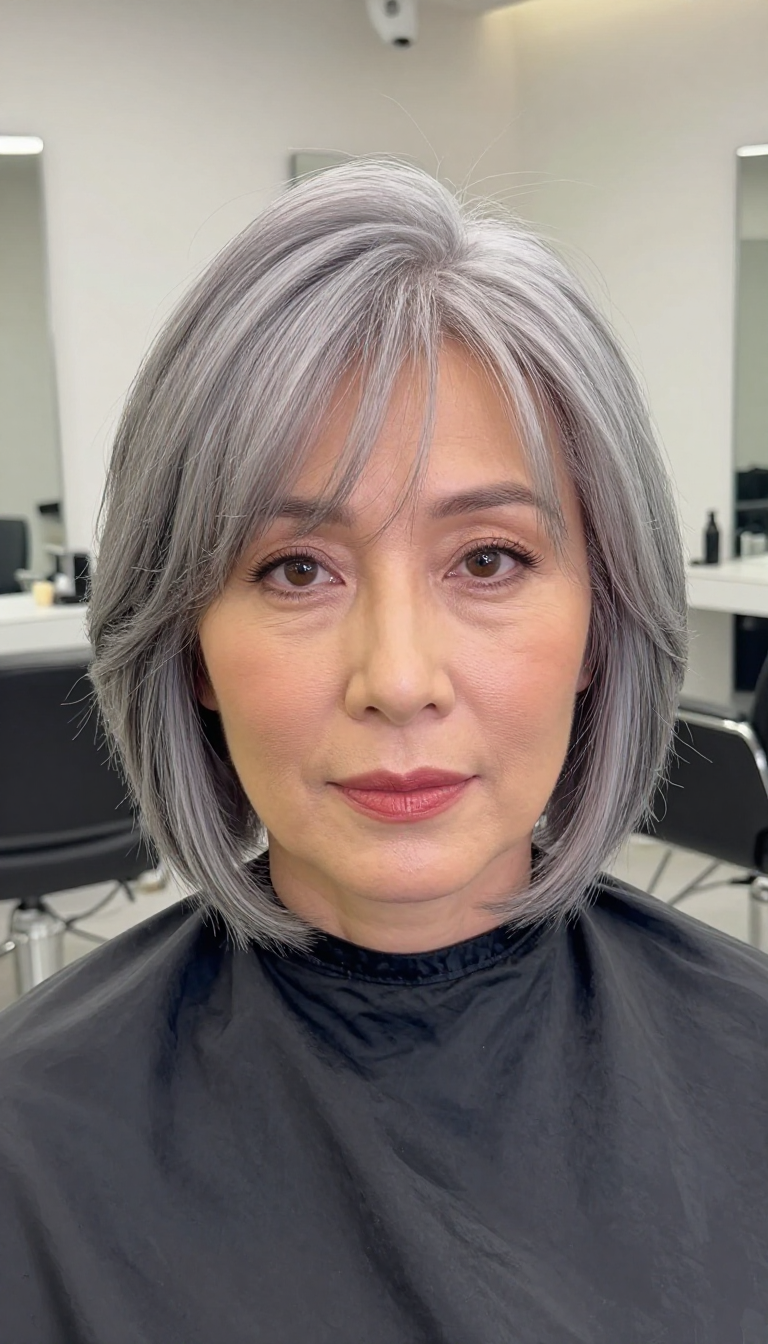
Silver-gray hair has a natural softness, and this bob leans into it. The chin-length cut has wispy, curved bangs swept to one side across the forehead, and the ends are gently feathered so they move rather than sit stiffly. The crown has a little lift, and the gray shows a mix of light and darker tones that gives the surface some depth.
Feathering can be tricky on fine hair, because too much texture at the ends makes the perimeter look see-through. Ask for light, soft movement and have your stylist keep the outline mostly intact, so the bob keeps its weight. The side-swept bangs are more forgiving than a full fringe, since they blend into the sides and can be pushed away when you want a different look. Gray hair can be drier or more wiry than pigmented hair, so a lightweight smoothing cream and a purple-toned shampoo used occasionally can help keep the finish silky and the silver cool-toned.
The Jaw-Length Bob With a Long Side-Swept Bang
The long bang is the quiet detail that sets this cut apart. Instead of stopping at the brows, it starts near the part and slides across the forehead into the side of the bob, so the fringe and the length read as one continuous line. The dark brown has a soft chestnut warmth, and the hair is smooth and glossy, with the ends sitting just at the jaw and turning slightly inward toward the face.
For fine hair, this kind of bang is a gentler option than a full fringe because it borrows less hair from the crown and leaves the sides intact. When you book, ask for a bang that is long enough to tuck behind the ear or sweep forward, and have the stylist blend it into the sides rather than cut it as a separate panel. A small round brush used on the ends while blow-drying can encourage that slight forward angle. A light smoothing serum, used sparingly on the lengths only, keeps the shine without flattening the roots.
The Sharp Inverted Bob in Champagne Blonde
Pale, fine hair can look wispy at the edges, which is why a precise inverted shape suits it. In profile, the back sits visibly shorter while the front sections slope longer toward the chin, creating a diagonal that points toward the face. The tips look dense and clean, and the deep side part shows crisp sectioning.
The soft blend of light and slightly deeper blonde tones adds dimension that helps the straight strands look layered with color, even though the surface is smooth. If you want this look, bring a profile photo and ask for the back to be shortened in a modest, graduated way, with the front only a little longer. Dramatic angles can thin out the ends of fine hair, so a conservative slope tends to hold weight better. Because the cut depends on a sharp line, plan on regular trims to keep the shape crisp, and use a flat iron or a smoothing blow-dry to keep the surface sleek.
The French-Style Bob With Wispy Brow-Grazing Bangs
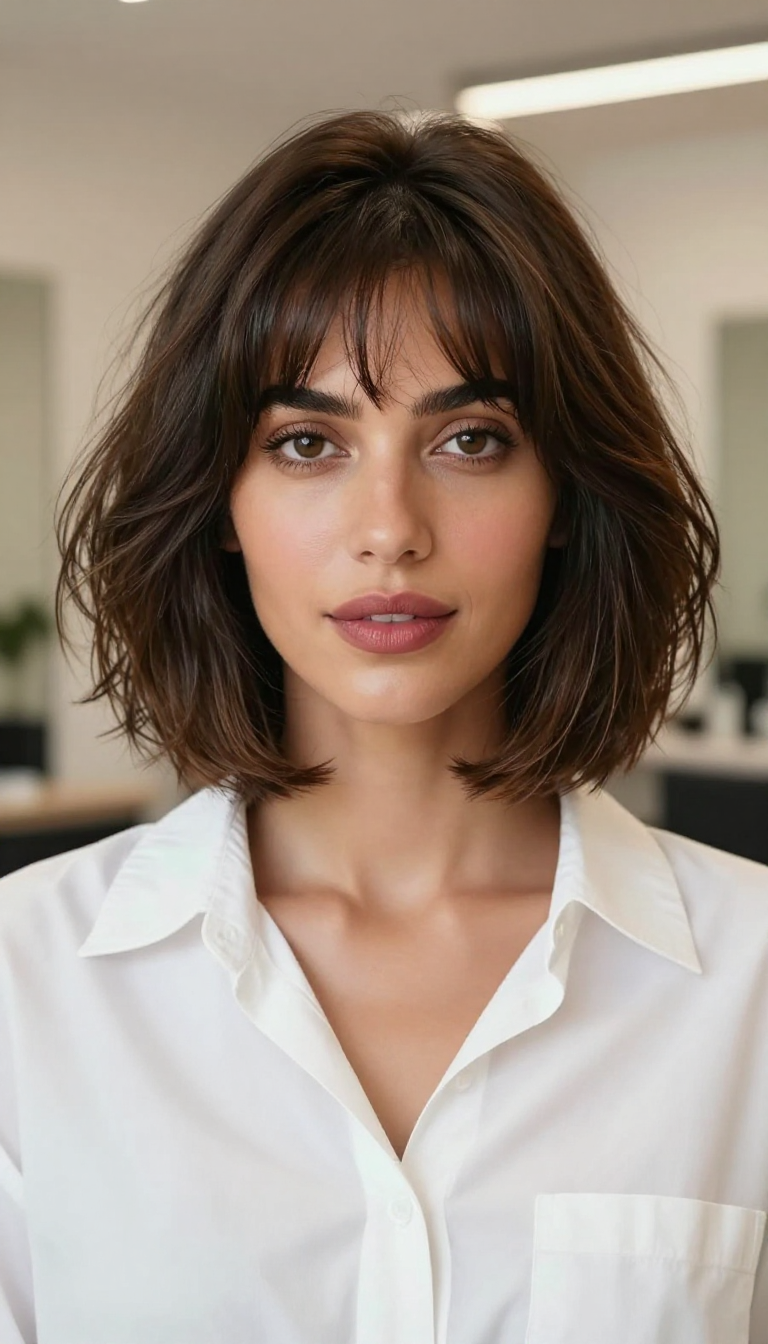
Not every fine-haired bob needs to be sleek. This one trades polish for air: the length ends just under the cheekbones, the bangs are short and light enough to show a little skin through, and the ends are softly tapered so they look rounded rather than heavy. The dark brown hair has natural movement, with a slightly off-center part and loose, uneven pieces framing the face.
The wispy bangs are the key to the Parisian feel, and they are also forgiving, since see-through fringe suits hair that cannot support a thick curtain. Ask for bangs cut light and slightly longer at the sides so they can blend into the bob as they grow. Tousled texture like this is easiest to get by air-drying or diffusing with a little texturizing spray or sea-salt mist at the mid-lengths, then breaking the pieces up with your fingers. Avoid heavy creams, which can weigh down the softness that makes the cut work.
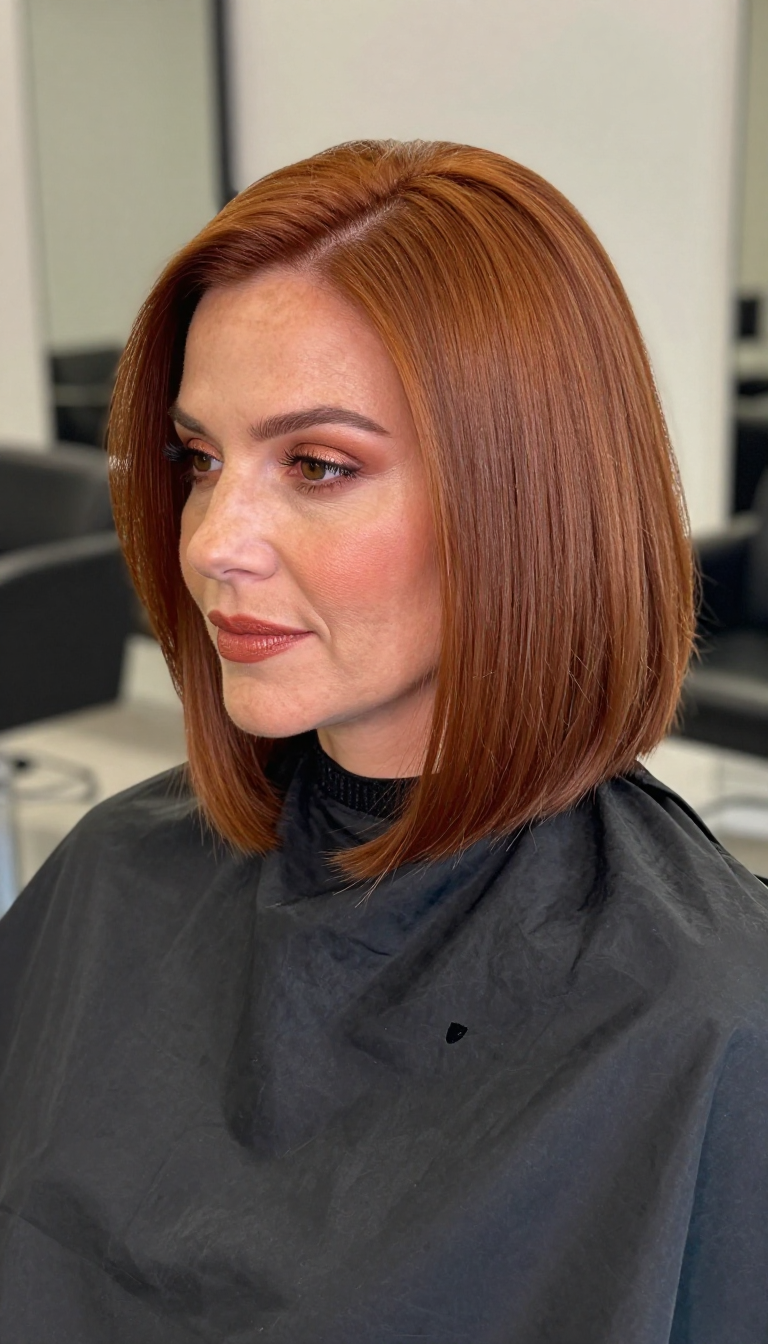
The Collarbone Lob With a Sloped Line in Copper
Color does a lot of the volume work here. The copper-auburn is rich and reflective, and shiny hair tends to look denser than matte hair of the same thickness. The bob lands near the collarbone, making it a longer lob, with a deep side part and a gentle slope that runs from shorter at the back to a little longer at the front, subtly pulling attention toward the face.
A lob offers a good compromise if you want to keep some length for tucking behind the ears or for a low ponytail, while still getting a defined perimeter. Ask for a few long, face-framing layers rather than many short ones, as heavy layering can make thin ends look sparse. Warm copper tones can fade with washing, so a color-safe shampoo and cooler water help hold the shade between salon visits. A quick pass with a flat iron or a smooth blow-dry is enough to bring out the glossy finish.
The Glossy Black Bob With Heavy Micro-Curved Bangs
Jet-black hair against a pale backdrop makes the shape impossible to miss. The bob stops at the chin and tilts slightly longer toward the front, while the straight-across bangs sit right at the lashes and curve subtly at the outer edges. The ends look thick, and the surface is smooth enough to reflect light in a clear band across the crown.
Dark, fine hair often looks denser than it is, which helps a heavy fringe feel intentional, but it also shows every gap and flyaway. Ask your stylist how much hair to section into the bangs so they look full without borrowing too much from the sides, and mention that you want the edges to curve inward slightly. At home, a boar-bristle brush and a bit of lightweight shine spray will help keep the finish smooth. Because the bangs rest on the lashes, expect to trim them often to keep them from poking into your eyes.
Whichever of these shapes appeals to you, the most useful thing you can bring to a consultation is an honest description of how your hair behaves on an ordinary day, since a good bob has to work with that, not just with the photo.