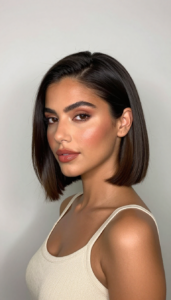
Gray hair already carries built-in dimension: silver, charcoal, pearl and white strands sit side by side in the same head of hair. A good cut is what lets that range show. Layers break up flat, solid-looking color, and texture lets light move across the strands, so the hair reads as multi-tonal and deliberately finished rather than dull. The nine cuts in this collection range from a cropped pixie to long, swingy lengths and tight curls. The first five are below.
The Shaggy Mid-Length Cut with Feathered Ends
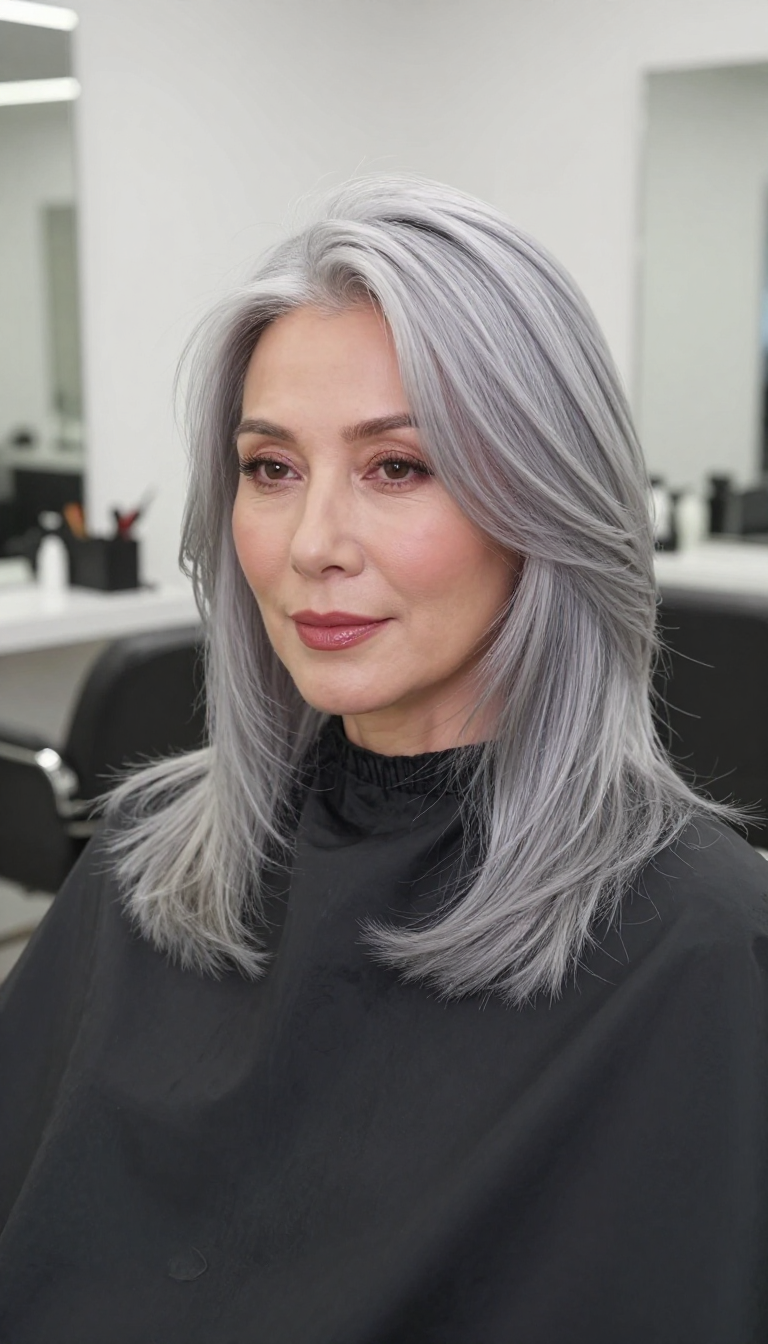
This cut sits at the collarbone, with long face-framing pieces that sweep back from the forehead and then break into separated, wispy ends. The layers are visibly stacked through the sides, so the hair moves outward at the bottom instead of hanging in one blunt line. The feathering is where the dimension comes from: where the ends thin out, lighter silver strands and darker gray ones show through each other, which gives the color depth without any added tint.
To ask for it, describe a shaggy, mid-length layered cut with soft, feathered ends and long layers around the face. Mention that you want the ends to look airy rather than heavy. A round brush and a blow-dryer, pulling the ends slightly outward, will reproduce the gentle bend. Because feathered ends can look frayed on dry or damaged hair, a lightweight smoothing product through the lengths helps keep the finish polished.
Long Stepped Layers with a Soft V-Shaped Perimeter
Seen from behind, this length falls well past the shoulder blades, and the layering shows in how the hair breaks into long, S-shaped waves instead of one heavy sheet. The bottom tapers toward a soft V, with the longest pieces down the center of the back and shorter ones curving in on either side. The color runs from deeper charcoal near the roots to bright silver ribbons through the lengths, and the layers are what make those ribbons visible.

If you're keeping length, this is a useful reference for what to ask a stylist: long, visible layers, a gently V-shaped or feathered back, and no choppy shortcuts that would thin out the ends. Loose waves from a large-barrel iron or loosely wrapped sections will bring out the layered movement, and a light shine product keeps the silver looking luminous rather than chalky. Long gray hair tends to show dryness at the ends first, so regular trims help preserve that tapered shape.
The Choppy, Piecey Pixie with Tapered Sides
Height at the crown is the defining feature of this short cut. The top is cut in short, separated layers and pushed up and forward into a tousled texture, while the sides and nape are tapered close, leaving a clean line around the ear. The salt-and-pepper tones do a lot of work here: because each piece is separated, bright silver strands stand out against darker gray underneath, creating a natural-looking highlight effect.

Tell your stylist you want visible texture on top with a closely tapered back and sides, and say how much fringe you're comfortable with, since the short pieces here fall forward toward the brow. A small amount of matte paste or clay, worked through dry hair with your fingertips and pushed in different directions, creates the separated look. Pixies like this grow out of their tapered shape fairly quickly, so plan on shorter intervals between cuts if you want the neckline to stay crisp.
A Rounded, Layered Taper for Coily Gray Hair
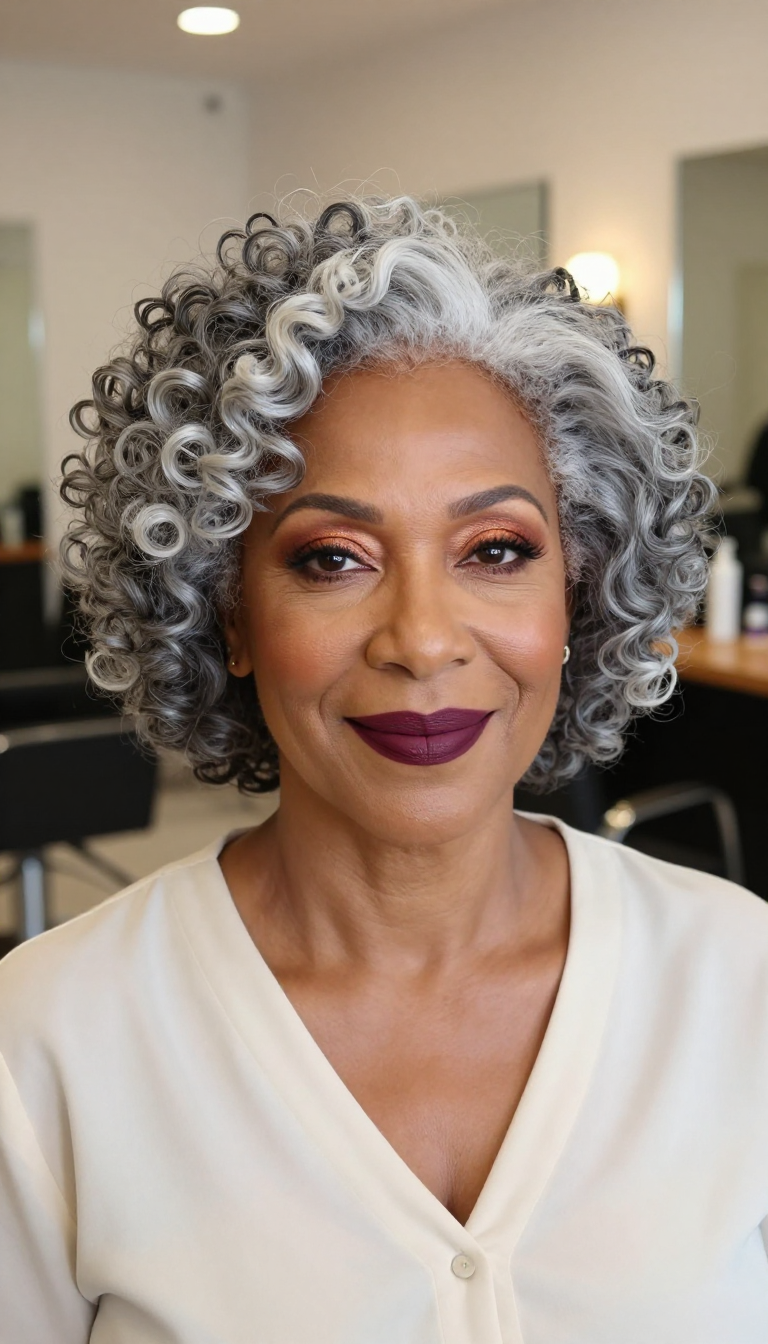
With tightly coiled hair, layering is as much about balance as movement. This cut is shaped into a soft, rounded outline, with more length and volume on top and shorter layers at the sides and nape so the silhouette stays even instead of widening toward the bottom. The coils themselves are the dimension: white and silver curls twist around darker gray ones, so even a close look shows several tones in one curl pattern.
A stylist who works regularly with coily textures is the best place to start. Ask for a rounded shape with the shortest layers at the sides and back, and for the cut to be shaped around your natural curl pattern, ideally while the hair is in its natural state. Moisture matters for keeping coils defined and springy, so a leave-in conditioner or curl cream applied to damp hair, followed by a gentle fluff or diffuse, is a sensible routine to discuss with your stylist. Silver and white strands can run a little drier than darker ones, so extra attention to hydration is worth considering.
The Gray Wolf Cut with Curtain Pieces
A wolf cut crosses a shag with a mullet-influenced shape: short, choppy layers at the crown that give lift, and longer, wispy lengths falling past the shoulders. Here the layered top sits close to the head before the shaggy lengths take over, and curtain-style pieces fall from the center part past the cheekbones. The ash-gray color reads as pale silver in some places and slate in others, and the uneven ends stop it from looking flat.
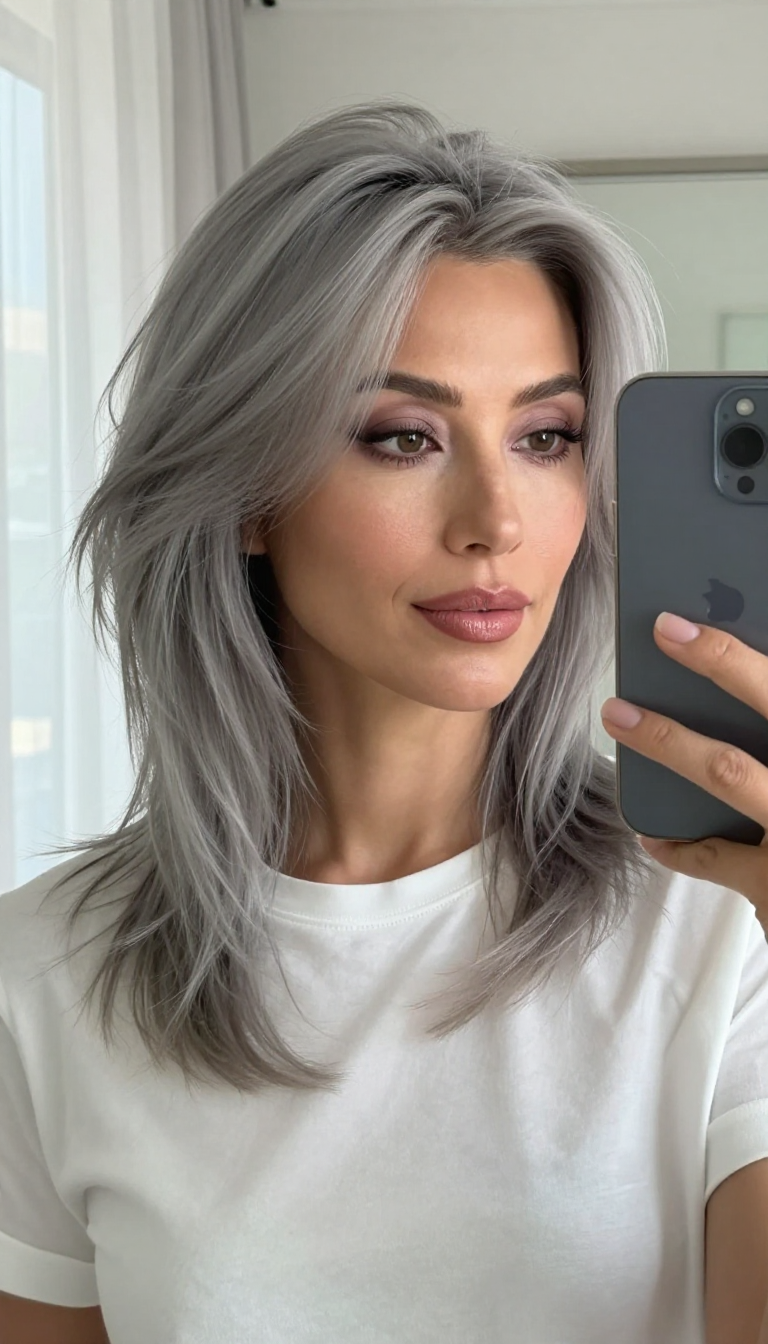
Bring a clear reference when asking for this, since "wolf cut" can mean different things from one stylist to the next. Point out the choppy crown layers, the shaggy lengths and the face-framing pieces at the cheekbones. For styling, a texturizing spray on damp hair and a bit of scrunching or loose waving will give the tousled shape. It suits hair that's happy to air-dry with some movement, and the short layers at the top need regular shaping to keep the silhouette from growing out into a single length.
The Textured Collarbone Lob with Flipped Ends

The lob is where gray hair's tonal range shows best, because the length gives bright silver lengths room to contrast with the shadowier gray at the part and temples. Here the hair lands right around the collarbone, parted to one side and swept back off the face. The perimeter is not blunt: the ends break up slightly and kick outward, and shorter pieces overlap the longer ones so the edge looks soft instead of ruler-straight. The darker gray near the root melts into brighter, almost platinum lengths, which reads as natural depth rather than a regrowth line.
When you ask for this, describe the ends rather than just the length: 'a collarbone lob with a broken-up, slightly choppy edge and light internal layering' tells a stylist you want movement without losing weight. The outward flip comes from styling, so a medium round brush on the ends while blow-drying, or a loosely wrapped flat iron turned away from the face, will create it. Because the shape depends on that edge, plan on a trim every six to eight weeks or so to keep the ends from collapsing inward against the shoulders. If your hair is very fine, you might ask your stylist to keep the layers subtle so the perimeter doesn't look sparse.
Feathered Layers with Sweeping Curtain Bangs
Soft white-silver hair, shoulder length, and a face that is framed rather than covered: this cut builds its polish from the front. Wispy curtain bangs part at the center and sweep out toward each cheekbone, then merge into longer layers that curve past the jaw. Strands vary from pearl to cooler pale steel, so even in a light shade the layers catch light at different depths.
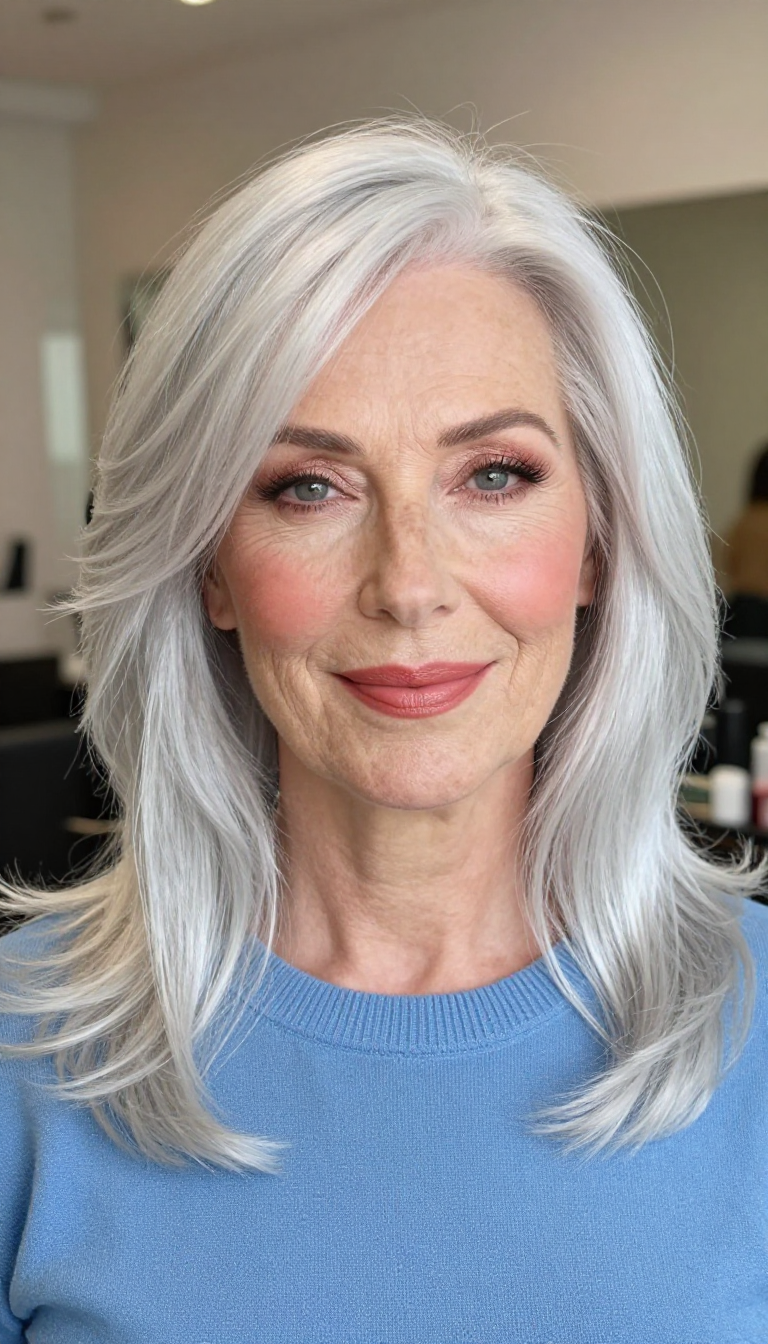
What separates this from a plain long layered cut is the way the pieces around the face are cut to travel in a curve, so they hug the cheeks and then flare away at the ends. A bouncy blowout is part of the effect. Rough-dry the bangs first, directing them away from the center, then use a large round brush or a hot roller on the front sections to build that outward sweep. For a consultation, bring up how short you want the bangs to start: they can graze the cheekbones for a softer, more blended look, or sit higher for a more defined frame. If your forehead has a strong cowlick or you have a lot of natural wave, ask how the bangs will behave when air-dried before committing.
The Graduated Stacked Bob in Steel Gray

Seen from behind, a stacked bob is all architecture. The back is cut short and builds upward in stacked, visible layers from a clean nape, creating a rounded curve at the crown, while the front lengths angle longer toward the jawline. Fine layered texture runs across the surface, and the lighter silver strands streak through a deeper steel base, so the stacking reads as lines of light and shadow rather than a flat gray block.
This is a cut that lives or dies by precision at the neckline, so ask your stylist how the nape will be finished and how often it will need tidying; a short, clean back typically looks its sharpest for only a few weeks. The silver highlights shown are a color choice layered over the cut, so if you want them, discuss whether you'd like them concentrated on top where the stacking is most visible. For daily styling, the shape does a lot of work on its own: a quick blow-dry with a small vent brush lifted at the crown, and a bit of light-hold cream worked through the ends to define the layers, is usually enough. Because the front angles forward, you can also adjust how much of it you tuck behind the ear to change how dramatic the angle looks.
The Rounded Salt-and-Pepper Shag
Short but not severe, this shag leans on its mix of silver, white and charcoal to do the dimensional work. The crown is lifted with feathered layers that sweep up and across to one side, creating a full, rounded outline, while the sides taper in wispy pieces that fall just over the ears. At the nape the hair is lightly textured, and the whole shape has a slightly tousled finish.
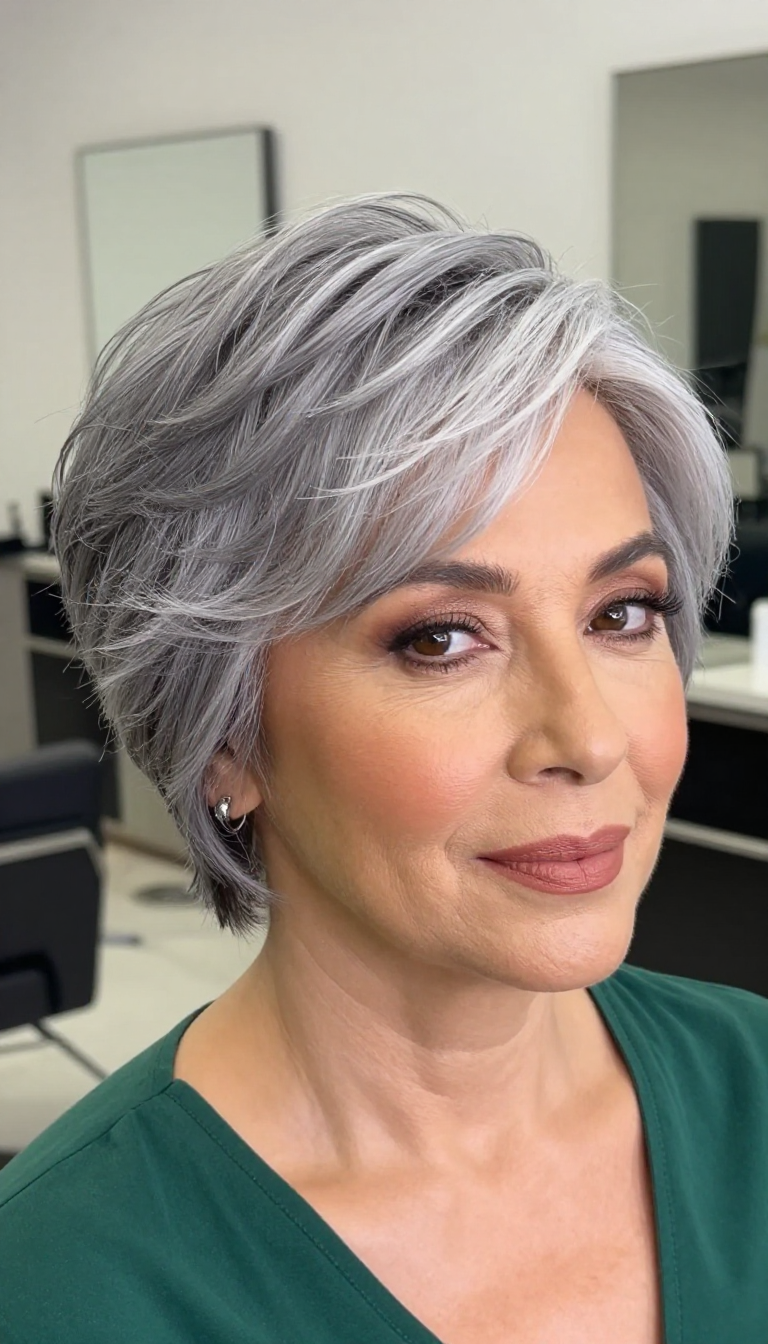
The charcoal strands that remain underneath are what make the silver on top look so bright, so it is worth telling your stylist you want to keep that natural contrast instead of blending it all to one shade. To ask for the shape, try 'short rounded shag with lifted crown layers and softly tapered sides,' and mention that you want the ends wispy rather than blunt. Styling is quick: blow-dry the top upward and over with your fingers or a small round brush, then break up the finish with a light pass of your hands. Short layers like these grow out visibly at the sides, so expect to revisit the salon regularly if you want the ear-skimming taper to stay neat.
Whichever of these shapes suits your hair, the strongest results come from bringing a clear picture and a clear description of the edges, the lengths around the face and the way you actually style your hair on a normal morning.